0:53
DBA-1: 43 Describe what WAL is and why it exists in #postgresql
PAVLOG
DBA-1: 42 Explain how dirty buffers are written to disk in #postgresql
0:54
DBA-1: 41 Describe process-specific memory areas (work_mem, maintenance_work_mem) in #postgresql
0:50
DBA-1: 40 Explain the role of shared buffers in #postgresql
15:00
PostgreSQL DBA-1: Domain 8, part 2 — Logging (destinations, rotation, log_statement, line prefix)
0:52
DBA-1: 39 Describe client backend processes in #postgresql
14:48
PostgreSQL DBA-1: Domain 8, part 1 — Monitoring (sessions, locks, statistics, pg_stat_statements)
DBA-1: 38 Describe background workers and their purpose in #postgresql
0:48
DBA-1: 37 Describe the role of the postmaster process in #postgresql
0:49
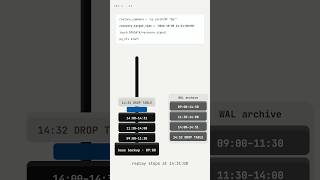
DBA-1: 36 Explain continuous archiving and Point-in-Time Recovery at conceptual level in #postgresql
22:17
PostgreSQL DBA-1: Domains 6 + 7 — MVCC, Locks, VACUUM & Autovacuum (all 12 exam topics)
DBA-1: 35 Describe WAL archiving concepts (archive_mode, archive_command) in #postgresql
0:47
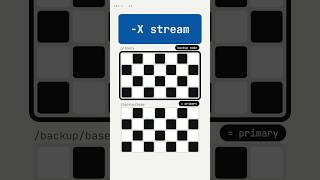
DBA-1: 34 Perform physical backups using pg_basebackup in #postgresql
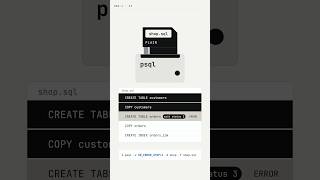
DBA-1: 33 Restore databases using pg_restore and psql in #postgresql
DBA-1: 32 Perform logical backups using pg_dump and pg_dumpall in #postgresql
DBA-1: 31 Differentiate between physical and logical backups in #postgresql
15:14
PostgreSQL DBA-1: Domain 5 — Server Architecture & Background Processes (all 8 exam topics)
DBA-1: 30 Describe public schema default privileges in #postgresql
DBA-1: 29 Grant and revoke access privileges in #postgresql
0:51
DBA-1: 28 Explain the relationship between roles and database objects in #postgresql
20:34
PostgreSQL DBA-1: Domains 3 & 4 — Roles, Privileges, Backup & Recovery (all 11 exam topics)
DBA-1: 27 Describe role attributes and their effects in #postgresql
19:49
PostgreSQL DBA-1: Domain 2 — Connecting, Database Objects & Basic SQL (all 11 exam topics)
DBA-1: 26 Create and manage roles in #postgresql
DBA-1: 25 Create and use procedures and functions in #postgresql
DBA-1: 24 Create and manage sequences in #postgresql
DBA-1: 23 Create and manage views and materialized views in #postgresql
DBA-1: 22 Create and manage indexes in #postgresql
DBA-1: 21 Use common #PostgreSQL SQL syntax, operators and expressions…
DBA-1: 20 Identify common #PostgreSQL data types
DBA-1: 19 Create and manage tables in #postgresql
16:13
PostgreSQL DBA-1: Domain 1 — Installation, Versioning & Basic Configuration (all 14 exam topics)
DBA-1: 18 Describe the role of schemas and search_path in #postgresql
DBA-1: 17 Create and manage databases in #postgresql
0:55
DBA-1: 16 Use #postgresqlpsql meta-commands and options
DBA-1: 15 Connect to #PostgreSQL using psql with connection strings and parameters
DBA-1: 14 Compare different #postgresql upgrade options and their trade-offs
DBA-1: 13 Major #postgresql upgrade methods: pg_upgrade, Dump & Restore, logical replication
DBA-1: 12 Perform minor version updates #postgresql
DBA-1: 10 Use pg_isready to check server availability #postgresql
DBA-1: 09 Manage the PostgreSQL service using pg_ctl and systemctl #postgresql
DBA-1: 08 Understand the role of SSL/TLS certificates #postgresql
DBA-1: 07 Configure pg_hba.conf for client authentication #postgresql
DBA-1: 06 Configure postgresql.conf for basic server settings #postgresql
DBA-1: 05 Explain the purpose and usage of tablespaces #postgresql
DBA-1: 04 Describe the structure and content of the data directory #postgresql
DBA-1: 03 Identify default directories, binaries and other PostgreSQL-related files
DBA-1: 02 Install PostgreSQL from packages
DBA-1: 01 Describe PGDG repository versus distribution repository
LIVE